
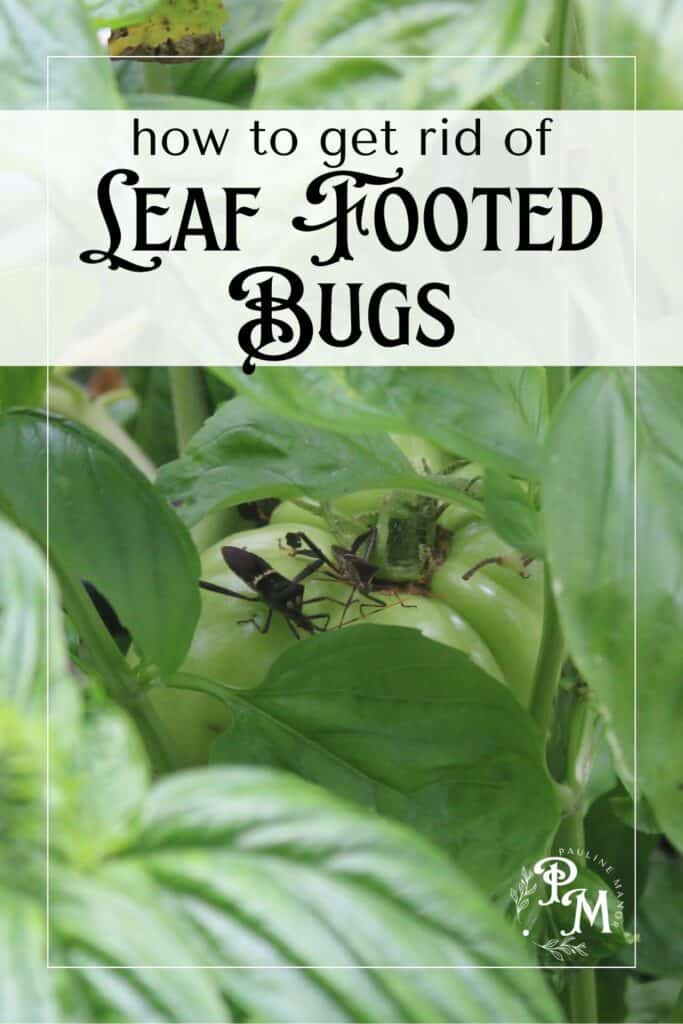
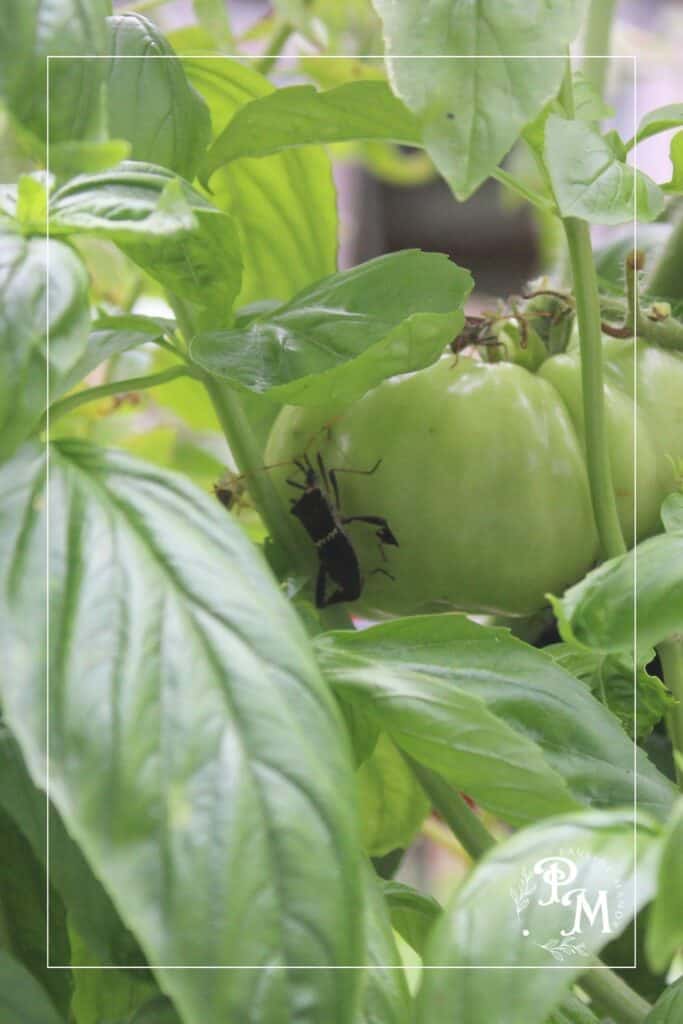
If you’re looking for how to get rid of leaf-footed bugs naturally or wondering why you suddenly have leaf-footed bugs on your tomatoes, you’re not alone. That’s exactly what happened to me this week. While checking my tomato plants, I found several leaf-footed bugs clustered on green tomatoes that were just beginning to develop. They’re one of the most common garden pests in Florida, and unfortunately, they can do quite a bit of damage if they’re left alone.
This post may contain affiliate links which means we receive a small commission at no cost to you when you make a purchase. As an Amazon Associate, I earn from qualifying purchases.
The good news is that leaf-footed bugs are usually easy to control if you catch them early. Even better, you don’t have to reach for harsh pesticides that can also kill the bees, butterflies, and beneficial insects your garden depends on. Here’s how to identify leaf-footed bugs, the damage they cause, and the natural methods I’m using to protect my garden.
How to Identify Leaf-Footed Bugs
Leaf-footed bugs are one of the most commonly misidentified garden pests. At first glance they look a lot like squash bugs or stink bugs, but there are a few easy ways to tell them apart.
Leaf-footed bugs are sap-feeding insects in the Coreidae family. They use a long, needle-like mouthpart to pierce fruits and vegetables before sucking out the juices inside. Unlike caterpillars, they don’t chew leaves or leave large holes in your plants. Instead, they damage the fruit itself, which means many gardeners don’t realize they have a problem until they begin harvesting.
Here in Northwest Florida, leaf-footed bugs seem especially fond of tomatoes, but they’ll also feed on peppers, squash, cucumbers, peaches, pomegranates, citrus, and several other fruits and vegetables.
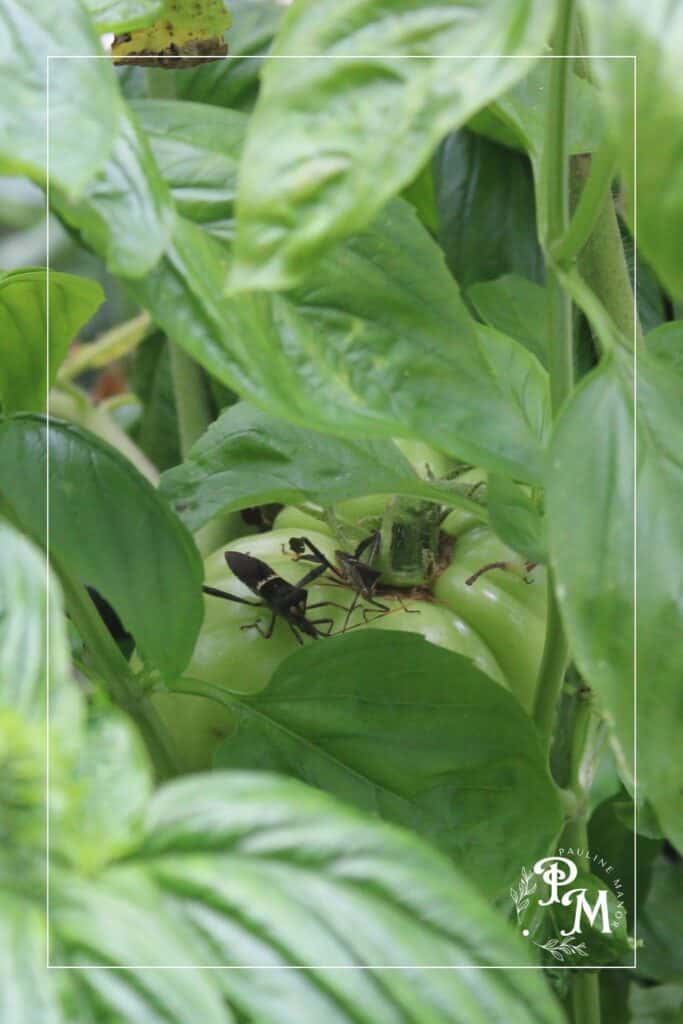
One of the easiest ways to identify a leaf-footed bug is by looking at its back legs. Adult leaf-footed bugs have flattened, leaf-shaped expansions on their hind legs that look almost like little paddles. That’s where they get their name, and it’s the easiest way to tell them apart from stink bugs, which are often mistaken for them.
What Does Leaf-Footed Bug Damage Look Like?
Because leaf-footed bugs feed by piercing the fruit, the damage can be surprisingly easy to miss at first.
Small puncture wounds may eventually develop into pale or yellow spots on tomatoes. As the fruit continues to grow, those feeding sites can become sunken or corky, causing uneven ripening and misshapen fruit. Sometimes you won’t even notice the damage until you slice open the tomato and find discolored flesh around the seeds.
If you notice pale spots, corky areas beneath the skin, or tomatoes that ripen unevenly, there’s a good chance you’re seeing early leaf-footed bug damage.
A few bugs probably won’t ruin your entire harvest, but larger populations can quickly reduce both the quality and quantity of your tomatoes.
How to Get Rid of Leaf-Footed Bugs Naturally
Before we talk about how to get rid of them, there’s one important thing you need to know… THEY FLY. Because apparently being giant creepy-looking bugs wasn’t enough. Nature also decided to give them wings. And yes, that’s exactly the kind of thing my nightmares are made of.
Whenever I find a new pest in my garden, my goal isn’t to kill everything that moves. My vegetable garden is full of honey bees, native pollinators, ladybugs, lacewings, and other beneficial insects that I want to keep around. If there’s a natural solution that protects them too, that’s always where I start.
Personally, I use a small handheld butane torch. It sounds a little dramatic, but it’s quick, effective, and lets me deal with individual bugs without spraying insecticides all over my vegetable garden. If you decide to try this, use common sense. Keep the flame well away from your plants, mulch, dry vegetation, and anything else that could catch fire. My goal is to get rid of the bug, not accidentally burn down Pauline Manor.

If a torch isn’t your style, knocking the bugs into a bucket of soapy water works well too, especially early in the morning when they’re slower and easier to catch.
After removing the adults, I’ll inspect the undersides of nearby leaves for eggs. Leaf-footed bugs lay small bronze-colored eggs in straight lines along stems and leaf veins. If you find them before they hatch, simply scrape them off or remove that section of the leaf. Preventing the next generation is much easier than trying to control dozens of adults later in the season.
Keeping weeds under control around the garden can also make a difference. Many common weeds serve as host plants where leaf-footed bugs can live and reproduce before moving into your vegetable beds. Cleaning up those hiding places reduces the number of insects that eventually make their way to your tomatoes.
While there are insecticides labeled for leaf-footed bugs, I personally avoid broad-spectrum sprays whenever possible. They don’t just kill the pests. They also kill many of the insects that actually help keep your garden healthy. Since I keep bees, protecting pollinators is always part of my decision-making process.
Leaf-Footed Bugs vs. Squash Bugs vs. Stink Bugs
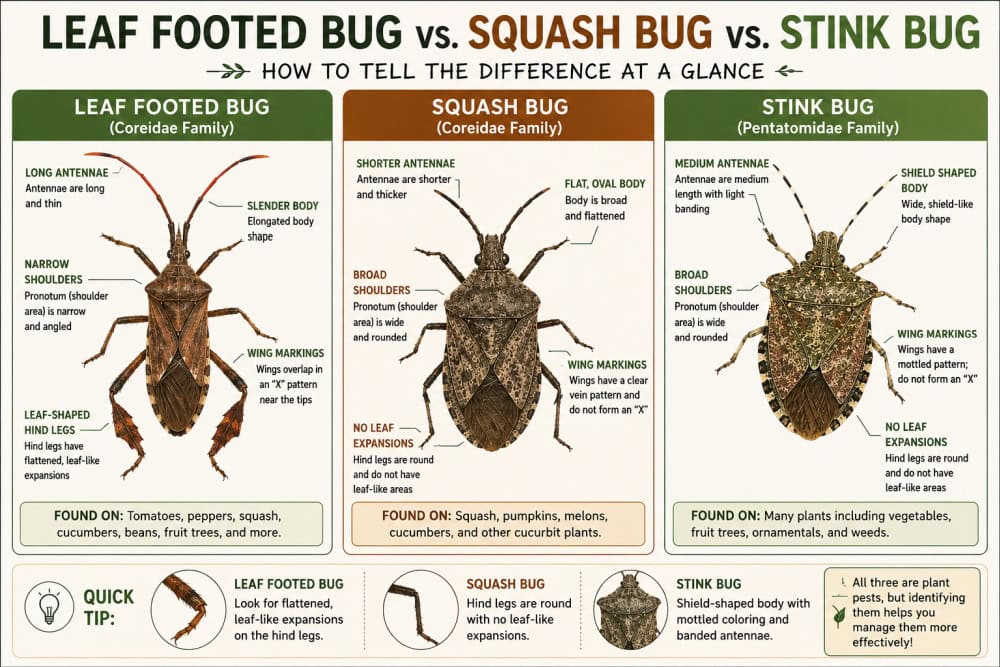
At first glance, leaf-footed bugs, squash bugs, and stink bugs all look remarkably similar, which is why they’re so often misidentified by home gardeners. While they’re all sap-feeding insects that damage plants by piercing them and sucking out the juices, they’re different pests with different favorite crops and slightly different habits.
The easiest way to tell them apart is by looking at their shape and, more importantly, their back legs. Leaf-footed bugs have distinctive flattened, leaf-shaped expansions on their hind legs, making them the easiest of the three to identify. Squash bugs have a flatter, more elongated body with smooth legs and are almost always found on squash, zucchini, pumpkins, and other cucurbits. Stink bugs have a broad, shield-shaped body with smooth legs and feed on a wide variety of fruits, vegetables, and ornamental plants.
If you’re still unsure which pest you’re dealing with, don’t worry. I created the quick comparison image below to help you identify them at a glance. Knowing exactly which bug has invaded your garden is the first step toward choosing the most effective way to get rid of it.
Are Leaf-Footed Bugs Harmful?
Fortunately, leaf-footed bugs aren’t dangerous to people or pets. They don’t bite, they don’t spread diseases, and they’re far more interested in your tomatoes than they are in you… but again… they fly… nightmares.
That said, they can become a serious nuisance in the vegetable garden. Large populations are capable of damaging a significant portion of your harvest if they’re allowed to reproduce unchecked.
How to Prevent Leaf-Footed Bugs in the Future
Like most garden pests, prevention is much easier than trying to control a large infestation.
Walking through your garden every day or two makes a tremendous difference. It’s much easier to remove a handful of insects than dozens of them several weeks later. I also make it a habit to look under leaves whenever I’m harvesting tomatoes or tying up plants. Those extra few minutes often help me catch problems long before they become overwhelming.
A healthy, diverse garden also helps encourage birds, spiders, assassin bugs, and other natural predators that feed on leaf-footed bugs and their eggs. While they’ll never eliminate every pest, they can certainly help keep populations under control.
Final Thoughts
One thing I’ve learned over my short time gardening is that every gardening season comes with its own challenges. Some years it’s squash vine borers. Other years it’s aphids or hornworms. This year, at least so far, it’s leaf-footed bugs.
Thankfully, they’re a pest that’s easy to manage if you stay observant and act quickly. A few minutes spent checking your plants, removing adults, and watching for eggs can go a long way toward protecting your harvest without harming the pollinators that make a productive garden possible.
Gardening is always a learning experience, and while I’d certainly rather find ripe tomatoes than hungry insects, every challenge teaches us something that makes us better gardeners the next season.
Frequently Asked Questions About Leaf-Footed Bugs
How do I identify a leaf-footed bug?
Adult leaf-footed bugs are dark brown or black with long antennae and distinctive flattened sections on their back legs that resemble leaves. This feature makes them easy to distinguish from stink bugs.
Do leaf-footed bugs kill tomato plants?
No. Leaf-footed bugs rarely kill tomato plants, but they can significantly damage developing tomatoes by feeding on the fruit.
Can I get rid of leaf-footed bugs without pesticides?
Yes. Hand-picking adults, removing egg masses, controlling weeds around the garden, and encouraging beneficial insects are all effective natural ways to reduce leaf-footed bug populations.
What vegetables do leaf-footed bugs eat?
Leaf-footed bugs commonly feed on tomatoes, peppers, squash, cucumbers, beans, peaches, citrus, pomegranates, and other fruits and vegetables grown in home gardens.