
Keeping your sourdough starter warm in colder months makes a big difference in how active and predictable it is, and the good news is you do not need anything fancy to make that happen. Even here at Pauline Manor, with the new brickwork and pool awning finally finished, the kitchen still gets chilly on winter mornings and my starter definitely notices.
Why Warmth Matters for Your Sourdough Starter
Your sourdough starter is alive, and like anything alive, it responds to the temperature around it. When it is warm and comfortable, it ferments steadily and rises the way you expect it to.
When it gets too cold, everything slows down, and the yeast activity drops. The starter can turn more sour, stay flat, and take much longer to peak.
Keeping your sourdough starter at a steady temperature gives you more consistent results. A warm starter behaves in a predictable way, which makes baking feel calmer and less like a guessing game.
What Temperature Is Best for a Sourdough Starter?
Most sourdough starters are happiest between about 75°F and 82°F for active fermentation. Cooler temperatures slow fermentation, while excessive heat can weaken or damage the yeast and bacteria.
That doesn't mean you have to maintain an exact temperature all the time. The goal is simply to avoid large swings and give your starter a consistently comfortable environment.
Find the Warm Spots in Your Kitchen
Every kitchen has a few sneaky warm pockets if you start paying attention. The top of the refrigerator is often slightly warmer because heat rises, and that alone can be enough to help your starter stay active.
Another simple option is placing your jar inside the oven with the light on and the heat off. The oven light gives off a gentle warmth that keeps the temperature steady, as long as you remember the starter is in there before preheating.
Use Warm Water When You Feed It
Feeding your sourdough starter with slightly warm water can give it a small boost. The water should feel like a warm bath, not hot, since too much heat can harm the yeast.
Warm water helps wake everything up and encourages fermentation to move along a little faster. This small change can make a noticeable difference when your kitchen runs cool.
Wrap the Jar for Insulation
If your house cools down overnight, wrapping your starter jar in a towel can help hold in warmth. It acts like a simple little jacket and slows down temperature swings.
You do not need anything complicated or tight, just a soft layer around the jar. This works especially well during colder evenings when the temperature drops after dark.
Etsy is full of small business crafters that make sourdough jar “cozies” that are too too cute… makes me want to get a sewing machine!
Try a Warm Water Bath
If your kitchen is especially cold, you can place your starter jar in a bowl of warm water after feeding. Keep the water level below the lid so nothing spills inside.
This gentle warmth helps the starter rise faster and stay active when the room temperature is working against you. It is a simple trick that feels almost too easy, but it works.
Use a Low Heat Source for Extra Warmth
If you already have a seed starting mat or a low heat pad, you can use it on the lowest setting under your jar. This provides steady, mild warmth that keeps fermentation moving without overheating.
You want gentle heat, not a sauna, so always check that the jar feels comfortably warm and not hot. A little warmth goes a long way.
Using a Proofing Box for Sourdough Starter
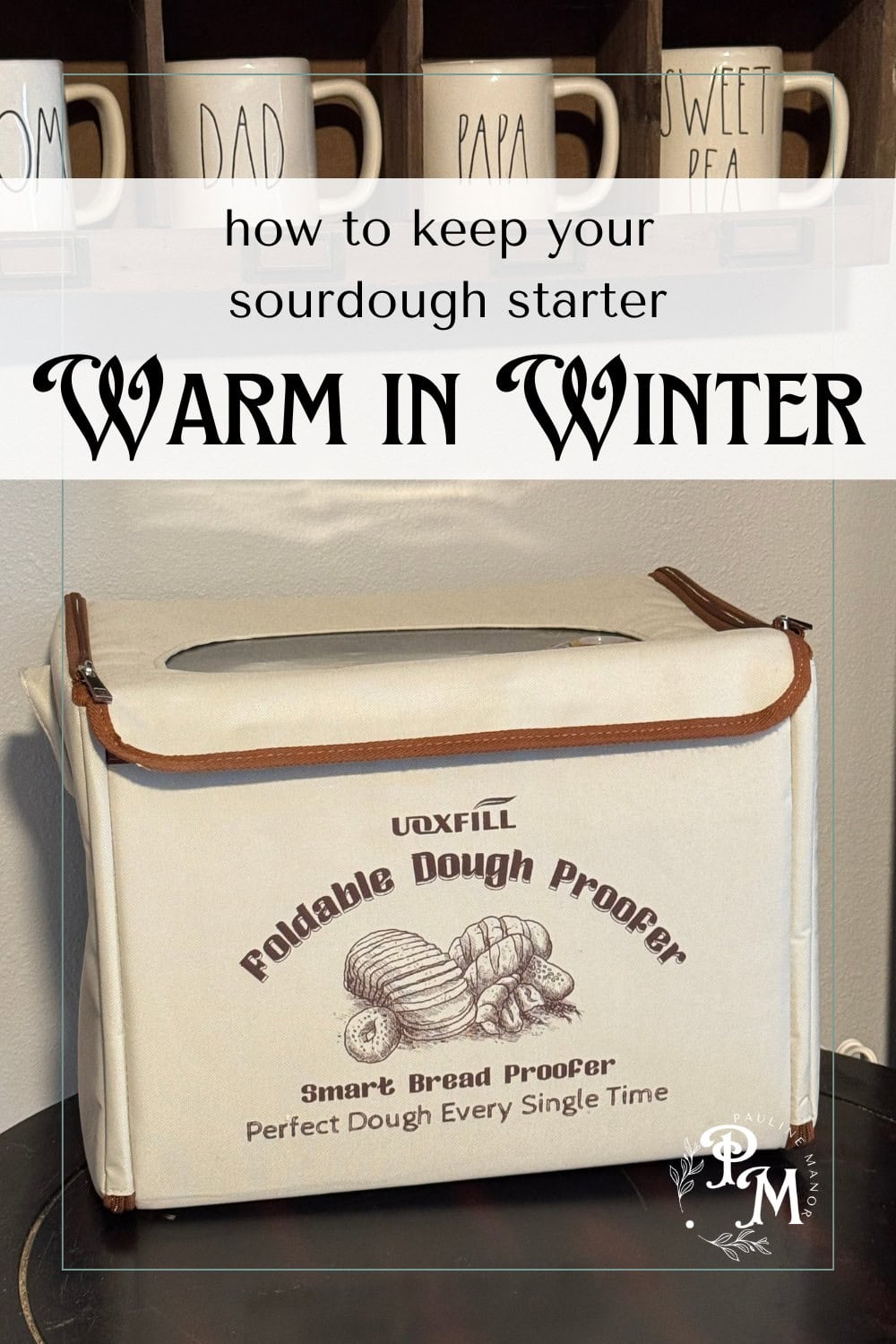
This year I invested in a folding bread proofing box with temperature control, and I have been genuinely impressed with how steady it keeps everything. I keep mine set to 68°F because it fits my feeding schedule and gives me a slower, more predictable rise. If you're trying to speed up fermentation, you may prefer a slightly warmer setting.
If you bake often or get tired of chasing warm spots around the kitchen, a sourdough proofing box can make the process feel simple and consistent. It is not required, but it does remove a lot of the seasonal guesswork.

Constructed with 5 layers of insulating materials, our sourdough proofing box maintains consistent temperatures and effective insulation. Its waterproof interior is easy to clean, and the included stainless steel shelf prevents bottom overheating, ensuring even heat distribution.
Watch the Rise, Not the Clock
In colder months, your sourdough starter will not follow the same timing it does in summer. It may take longer to peak, and that is completely normal.
Instead of relying only on hours, look at how your starter behaves. A warm, active starter will be bubbly, domed on top, and airy inside, while a cold one will stay flatter and denser.
Keep Your Feeding Routine Consistent
Warmth matters, but consistency matters just as much. Feeding your starter regularly keeps it balanced so it can handle small temperature changes without struggling.
A steady feeding routine paired with a warm, reliable spot in your kitchen is what keeps your sourdough starter strong. When those two things work together, baking becomes much easier.
Bringing It All Together
You do not need special equipment or an elaborate setup to keep your sourdough starter warm. A few warm pockets in your kitchen, slightly warm water, and a consistent routine will usually do the trick.
A cozy starter is an active starter, and keeping it comfortable through the colder months means your dough will be lighter, stronger, and much easier to work with.
FAQ
What temperature should a sourdough starter be?
Most sourdough starters ferment best between about 75°F and 82°F. Cooler temperatures slow fermentation, while temperatures that are too high can damage the microorganisms in the starter.
Is it okay if my sourdough starter gets cold?
Yes. A cold starter usually isn't harmed, but it will ferment much more slowly. Once it warms up and is fed regularly, it typically becomes active again.
Can I leave my sourdough starter in the oven with the light on?
Yes, as long as the oven remains off. The oven light often creates a gently warmed environment that helps maintain a more consistent temperature.
Do I need a proofing box?
No. Warm spots in your kitchen, warm water, or even wrapping the jar in a towel are often enough. A proofing box simply provides more consistent temperatures for people who bake frequently.